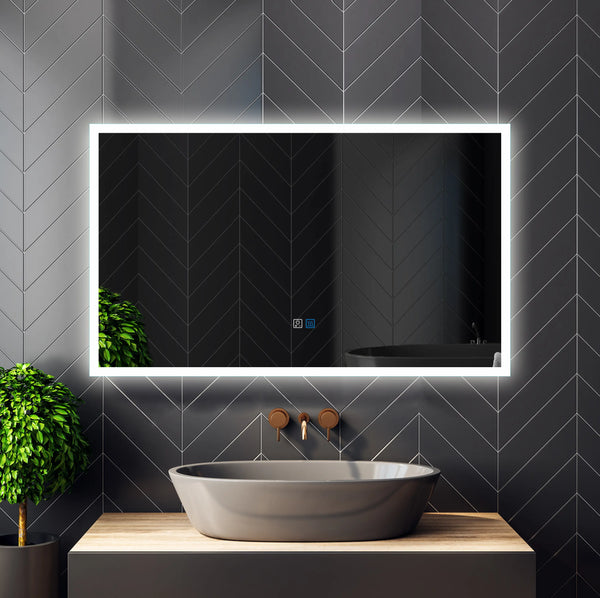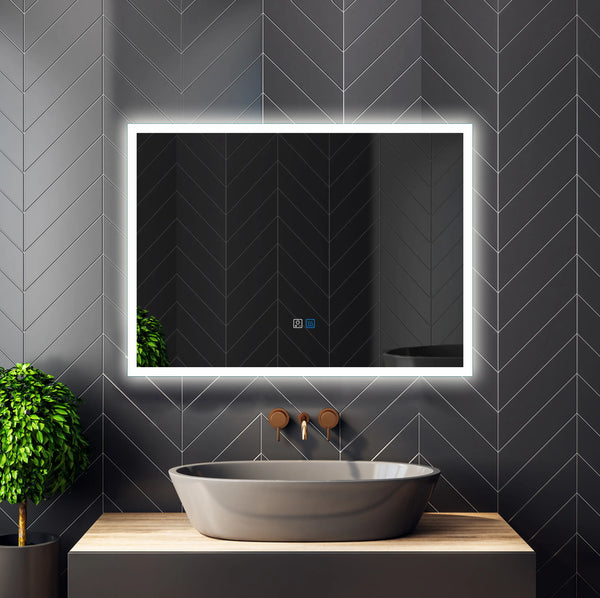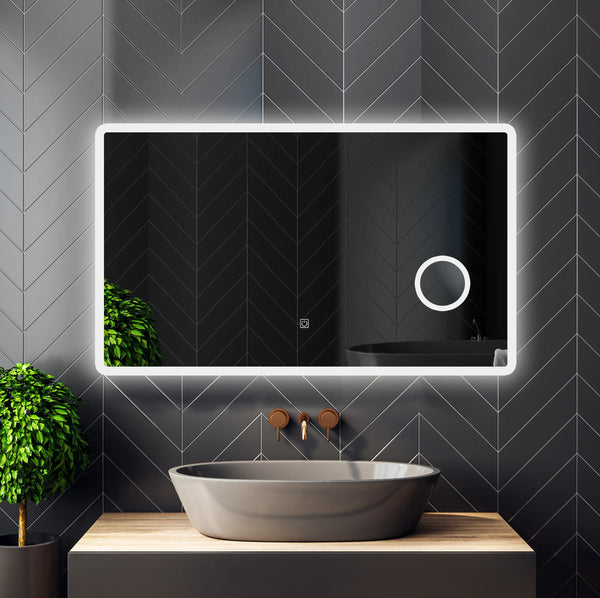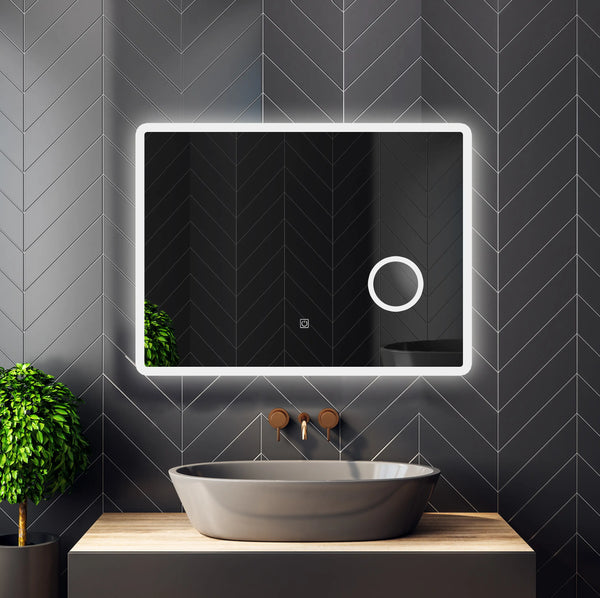
The biggest install question isn't difficulty — it's power. Whether you rent or own decides between a plug-in mirror you can take with you and a hardwired one that disappears into the wall. Here's how to choose, and what's safe to do yourself.
Should renters choose plug-in?
Yes — renters should choose a plug-in LED mirror. It powers from a nearby GFCI outlet with no rewiring, leaves no permanent changes, and comes with you when you move. Use a removable mounting solution if you can't drill, and tuck the cord along the backsplash.
Why owners often prefer hardwired
Homeowners staying put usually prefer hardwired: the mirror connects to the existing bathroom light circuit for a clean, cord-free look that reads built-in and adds resale appeal. It's the more permanent, more finished installation.
Is installing a lighted mirror safe to DIY?
Plug-in models are fully DIY — mount the bracket, hang the mirror, plug it in. For hardwired models, connecting to an existing fixture's wiring is a common DIY job for the comfortable, but if you're adding a new circuit or unsure about your wiring, hire a licensed electrician. Every mirror is damp-rated and ships with a template, hardware and instructions.
Can I convert a hardwired mirror to plug-in (or vice versa)?
Many TACOVICI mirrors support both: a hardwired model can often be fitted with a plug kit, and a plug-in can be wired in by an electrician. Check the product's spec table before buying if you want the flexibility.